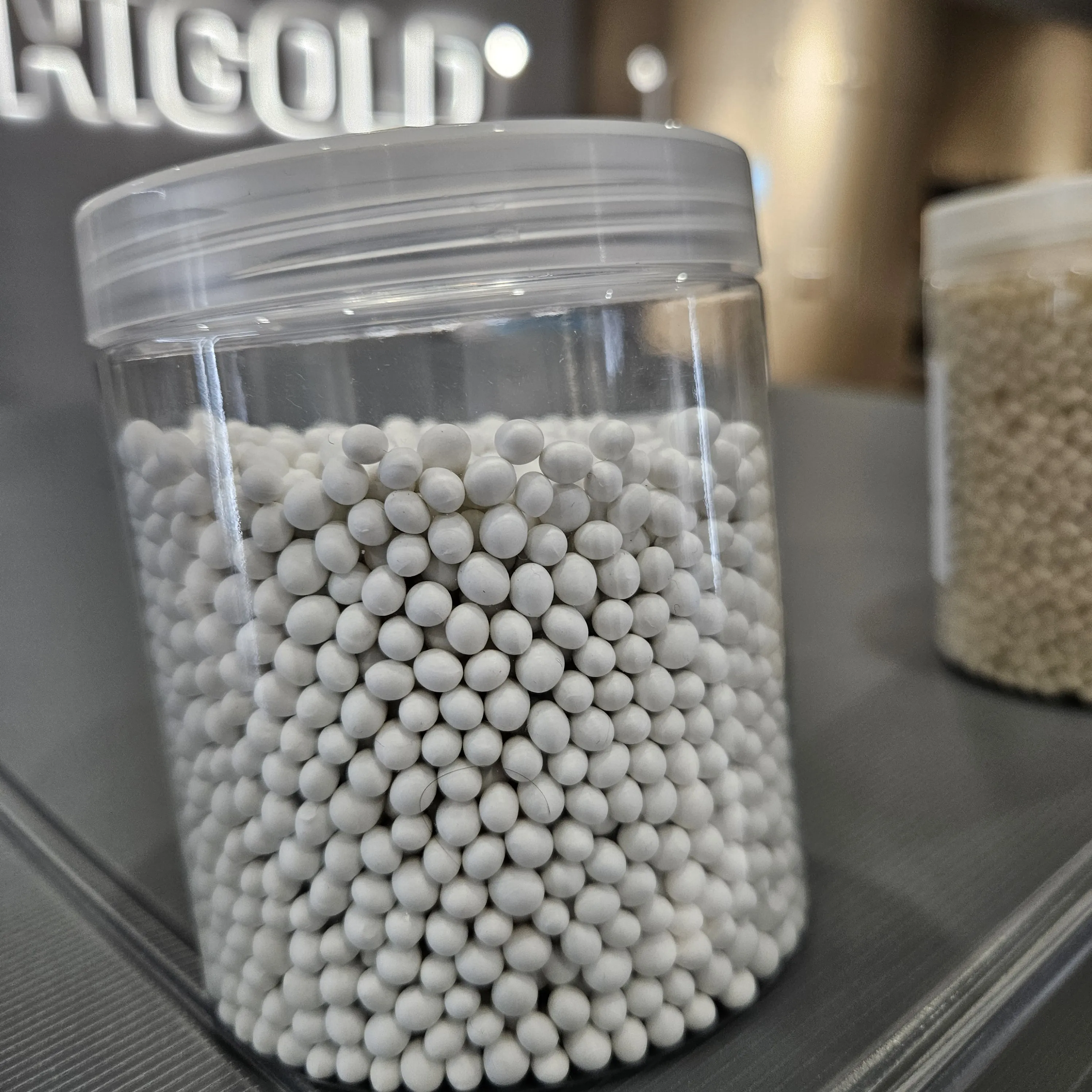
Hot-melt adhesives play an important role in modern furniture manufacturing. They are widely used for edge banding, profile wrapping, panel lamination, and other assembly processes where fast bonding and efficient production are essential.
For details relevant to this topic, review hot melt adhesive range and EVA hot melt adhesive grades.
However, not all hot-melt adhesives offer the same performance. Some prioritize cost efficiency and fast setting, while others are designed for higher moisture resistance, heat resistance, or demanding bonding conditions.
Understanding the main types of hot-melt adhesives helps furniture manufacturers, cabinet makers, and adhesive distributors choose products that match their production equipment, materials, and end-use requirements.
In this guide, we explain the classification of hot-melt adhesives, compare their characteristics, and outline the key factors to consider when selecting an adhesive for furniture production.
1. What Are Hot-Melt Adhesives?
Hot-melt adhesives are bonding materials supplied in solid form. They are heated until molten, applied to a suitable surface, and then cooled to develop bond strength.
Unlike conventional water-based or solvent-based adhesives, hot-melt adhesives generally do not require water or solvent evaporation to form the initial bond. This makes them suitable for automated production lines that require rapid processing and short handling times.
In furniture manufacturing, hot-melt adhesives are commonly used for:
- PVC, ABS, PP, and other edge banding materials
- MDF and particleboard edge bonding
- Furniture profile wrapping
- Decorative panel lamination
- Veneer and other furniture component bonding
The appropriate adhesive depends on the materials being bonded, the production process, and the performance required from the finished product.
2. Main Types of Hot-Melt Adhesives
For furniture manufacturing and edge banding, three important adhesive technologies are EVA, PUR, and PO hot-melt adhesives.
2.1 EVA Hot-Melt Adhesives
EVA stands for ethylene-vinyl acetate. EVA hot-melt adhesives are widely used in furniture production because they offer a practical balance between bonding performance, processing convenience, and cost.
Key characteristics:
- Good bonding performance for many conventional furniture applications
- Fast setting as the adhesive cools
- Compatibility with many PVC, ABS, and other suitable edge banding materials
- Straightforward processing on compatible edge banding machines
- Generally lower material cost than reactive PUR systems
Typical applications:
EVA hot-melt adhesives are commonly used for standard furniture, office furniture, wardrobes, shelving, and cabinet production.
They are particularly suitable for manufacturers who need reliable bonding at a competitive production cost.
However, EVA adhesives are thermoplastic. Their bond performance can decrease under excessive heat, and their moisture resistance is generally lower than that of properly cured PUR adhesives. The actual performance depends on the adhesive formulation and application conditions.
When selecting EVA adhesive, manufacturers should consider viscosity, softening point, open time, application temperature, and machine speed.
2.2 PUR Hot-Melt Adhesives
PUR stands for polyurethane reactive. PUR hot-melt adhesives initially develop strength as they cool and then undergo a chemical reaction with moisture to form a cross-linked structure.
This additional curing process gives suitable PUR formulations enhanced resistance to heat, moisture, and certain chemicals.
Key characteristics:
- High ultimate bonding performance in suitable applications
- Improved heat and moisture resistance after curing
- Potential for a thin, clean adhesive line
- Suitability for demanding furniture applications
- Additional requirements for handling, storage, and equipment maintenance
Typical applications:
PUR hot-melt adhesives are often considered for kitchen cabinets, bathroom furniture, premium cabinetry, and furniture components exposed to elevated humidity or temperature.
PUR can also be useful when manufacturers require a more durable bond than a conventional EVA formulation can provide.
However, PUR is not automatically the best option for every production line. It usually costs more than EVA and requires appropriate equipment, moisture control, and cleaning procedures. The curing process must also be considered when planning production and handling.
2.3 PO Hot-Melt Adhesives
PO stands for polyolefin. PO hot-melt adhesives use polyolefin-based polymer systems and are available in formulations designed for particular bonding and processing requirements.
Depending on the formulation, PO adhesives can offer useful heat resistance, stable processing, and good bonding performance on compatible substrates.
Key characteristics:
- Formulations available for demanding production conditions
- Potential for good heat resistance
- Useful processing characteristics on suitable equipment
- Compatibility with selected edge banding materials and substrates
Typical applications:
PO hot-melt adhesives may be used in furniture production, panel processing, profile wrapping, and other applications where their specific formulation offers advantages over alternative adhesive technologies.
Their performance varies considerably by grade. Manufacturers should verify compatibility with the edge banding material, panel surface, machine, and required bond properties before making a selection.
3. EVA vs. PUR vs. PO: What Are the Differences?
The following table provides a general comparison of the three adhesive technologies.
| Comparison factor | EVA | PUR | PO |
|---|---|---|---|
| Bonding mechanism | Cooling and solidification | Cooling followed by moisture-triggered chemical curing | Cooling and solidification |
| Relative cost | Generally low | Generally high | Formulation-dependent |
| Initial bond development | Fast | Fast initial setting; further curing required | Formulation-dependent |
| Heat resistance | Formulation-dependent; often lower than PUR | Generally high after proper curing | Can be higher than conventional EVA |
| Moisture resistance | Generally moderate | Generally high after proper curing | Formulation-dependent |
| Processing requirements | Relatively straightforward | Requires moisture control and suitable maintenance procedures | Depends on grade and equipment |
| Common selection priority | Cost-effective general-purpose bonding | Higher ultimate durability | Specific performance and processing needs |
These comparisons are general guidelines, not guaranteed specifications for every product. Actual performance should be confirmed using the manufacturer’s technical data sheet and production trials.
4. How to Select the Right Hot-Melt Adhesive
Choosing an adhesive based only on its chemical type or price can lead to production problems. A more reliable approach is to evaluate the following factors.
4.1 Identify the Materials Being Bonded
Start by identifying both the edge banding material and the panel substrate.
Common edge banding materials include PVC, ABS, PP, melamine, and wood veneer. Common substrates include MDF, particleboard, and plywood.
Different materials have different surface properties. Even adhesives within the same chemical family may perform differently on different surfaces.
For example, when bonding PVC edge banding to MDF, a suitable EVA formulation may provide satisfactory performance in conventional furniture production. PP edge banding, however, may require a specifically formulated adhesive or appropriate surface treatment.
Always confirm material compatibility before selecting the final adhesive grade.
4.2 Consider the Required Heat and Moisture Resistance
The working environment of the finished furniture is another important consideration.
For standard indoor furniture, an appropriately selected EVA adhesive may provide sufficient performance.
For kitchen or bathroom furniture, where humidity, cleaning conditions, or elevated temperatures may be more demanding, PUR may be worth evaluating.
However, adhesive selection should reflect the actual service conditions. Not every kitchen cabinet requires PUR, and not every PUR product is suitable for every application.
4.3 Match the Adhesive to the Machine
The same adhesive may perform differently on different production lines.
Important machine-related factors include:
- Glue pot and application system design
- Operating temperature range
- Roller or nozzle configuration
- Production line speed
- Pressure and contact time
- Adhesive viscosity at the working temperature
A high-viscosity adhesive may not distribute properly under unsuitable operating conditions, while an adhesive with an inappropriate open time may not establish sufficient contact before cooling.
For this reason, manufacturers should select an adhesive grade that matches the equipment rather than adjusting the machine solely to accommodate an unsuitable product.
4.4 Evaluate Open Time and Setting Speed
Open time is the period during which the adhesive remains sufficiently workable to form a proper bond after application.
If the adhesive sets too quickly for the production process, adequate wetting and contact may not occur. If it remains workable for too long, the line may require additional time or different processing conditions.
The ideal open time depends on machine speed, application temperature, ambient conditions, and the materials being bonded.
High-speed production lines therefore need an adhesive formulation designed for their specific operating conditions.
4.5 Check Viscosity and Application Temperature
Viscosity determines how easily the molten adhesive flows and spreads across the bonding surface.
If viscosity is too high under the actual application conditions, the adhesive may not wet the surface adequately. If it is too low, excessive spreading or adhesive squeeze-out may occur.
Application temperature affects viscosity, wetting, thermal stability, and the available bonding time.
Manufacturers should follow the temperature and viscosity recommendations in the technical data sheet for the exact adhesive grade. A temperature range suitable for one EVA or PUR product should not automatically be applied to another.
4.6 Balance Adhesive Cost and Total Production Cost
The lowest price per kilogram does not necessarily produce the lowest total bonding cost.
A more useful comparison considers:
- Adhesive consumption per meter or per finished panel
- Bonding defects and rejected products
- Machine cleaning and maintenance
- Production speed and downtime
- Required durability and customer specifications
For standard furniture, a cost-effective EVA formulation may be the most economical choice. For demanding applications, a higher-priced adhesive may reduce failures and rework enough to justify the additional material cost.
The objective is to achieve the required bonding performance at the lowest practical total production cost.
5. Common Hot-Melt Adhesive Problems and Their Causes
Even a suitable adhesive can perform poorly when application conditions are incorrect.
Edge banding separation
Possible causes include unsuitable adhesive selection, insufficient adhesive coverage, contaminated surfaces, inadequate pressure, incorrect temperature, or incompatible materials.
Visible glue lines
Potential causes include excessive adhesive application, inappropriate viscosity, poor edge banding fit, or unsuitable pressure and trimming settings.
Poor bonding at high production speeds
The adhesive may have an unsuitable open time or setting profile for the line speed. Application temperature, pressure, and material temperature should also be checked.
Excessive adhesive residue
This can result from incorrect application settings, excessive adhesive quantity, or a mismatch between adhesive properties and machine conditions.
Bond failure after exposure to humidity or heat
The adhesive technology, specific formulation, curing conditions, and intended service environment should all be reviewed.
When troubleshooting, change one variable at a time where practical and record the results. This makes it easier to identify the actual cause rather than replacing the adhesive unnecessarily.
6. Why Technical Data Sheets Matter
Before purchasing hot-melt adhesive in bulk, request the current technical data sheet (TDS) and safety data sheet (SDS) from the supplier.
The TDS should provide relevant information such as:
- Adhesive type and intended applications
- Recommended application temperature
- Viscosity and test conditions
- Softening point, where applicable
- Open time and setting characteristics
- Recommended storage conditions and shelf life
- Relevant processing limitations
For PUR adhesives, additional attention should be given to moisture exposure, curing, handling, and cleaning requirements.
Technical values should always be interpreted using the manufacturer’s specified test methods. For example, a softening point measured by one method is not necessarily equivalent to a recommended operating temperature.
Before committing to a large order, conduct a production trial using the actual edge banding material, panel substrate, and machine.
7. Choosing a Reliable Hot-Melt Adhesive Supplier
A reliable supplier should offer more than a competitive quotation.
When evaluating a hot-melt adhesive manufacturer, consider:
- Consistency between production batches
- Clear and accurate technical documentation
- Product recommendations based on your machine and materials
- Stable supply capacity and delivery schedules
- Sample availability for production testing
- Technical support for bonding problems
- Suitable packaging and storage guidance
For distributors and furniture manufacturers, a supplier capable of providing consistent product quality and practical technical support can help reduce production risks over the long term.
8. Conclusion: Which Hot-Melt Adhesive Should You Choose?
There is no single hot-melt adhesive that is ideal for every furniture manufacturing application.
EVA is a practical option for many standard furniture and edge banding applications where cost efficiency, fast setting, and straightforward processing are important.
PUR is worth considering when the finished product requires enhanced heat resistance, moisture resistance, or long-term bonding durability, provided that the equipment and curing conditions are appropriate.
PO offers another option for applications where a particular formulation meets the required performance and processing conditions.
The best selection depends on the edge banding material, panel substrate, machine settings, production speed, service environment, and total production cost.
Looking for EVA or PUR hot-melt adhesive for furniture manufacturing?
Wuhan Quanyixintong New Materials Co., Ltd. supplies hot-melt adhesive solutions for furniture and edge banding applications. Contact our team to discuss your materials, production equipment, and bonding requirements so that a suitable product can be evaluated for your application.
Contact us for product information, technical specifications, and sample testing.